
Supporting a loved one through cancer
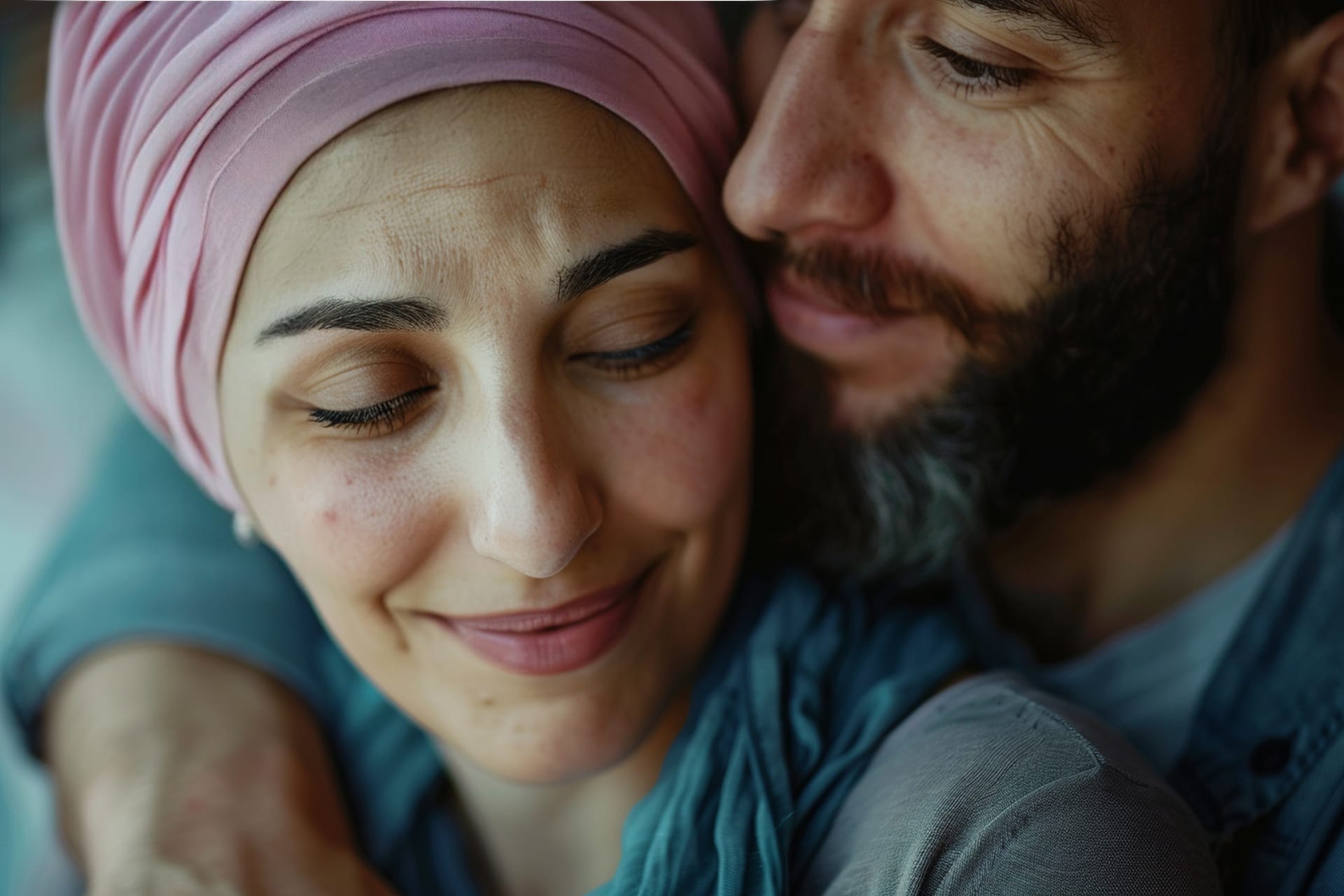
When Mehdi learns that his wife Siham has breast cancer, his first reaction is to want to take charge of everything. The appointments, the research, the logistics, the children, the morale. Be the pillar. Let nothing show. Hold on. For weeks, he works at it - until one day, in the hospital parking lot, he collapses against his car without really knowing why.
Cancer never strikes alone. Around the sick person, there's always a circle - spouse, children, parents, close friends - who go through the ordeal in their own way, often in the shadows, often without a safety net. Little is said about these invisible caregivers. And yet, their equilibrium largely conditions that of the patient.
The "all for them" trap
Giving everything to the person who is ill is a natural, human and admirable instinct. But losing yourself completely comes at a cost.
Those who put their own needs aside entirely eventually burn out and, paradoxically, end up being less present and simply less able to help.
Psychologists who support families in cancer care often say it: looking after yourself isn't a luxury, it's essential. You can't pour from an empty cup.
Being there without having all the answers
Mehdi didn't always know what to say to Siham.
When someone is ill, words can feel clumsy, and it's tempting to be silent or – on the opposite - to fill the space with too much talk.
At first, Mehdi tried to reassure her at all costs. But Siham didn't need answers. She simply needed him there, or to hear: "I'm here for you. I don't know what to say, but I'm here."
The things left unsaid
Cancer often creates a kind of double silence: the patient protects their loved ones, and their loved ones protect the patient. Each plays a role for the other, and within this space of mutual protection, silence builds up. Daring to talk about fear, anger or exhaustion doesn't make things worse.
On the contrary, opening up about difficult subjects can ease some of the tension.
What comes next?
For loved ones, the end of treatment often comes as a relief, while the patient may be going through a period of real vulnerability. Treatment is over, but the illness has left its mark, and going back to "life before" can feel hard to imagine.
For Mehdi, the worst seemed to be over just as Siham was finding her way back to a normal life without medication. He too had to learn how to stay close without smothering her, and without rushing her return to everyday life.
Good to know
In Morocco, between 50,000 and 60,000 new cancer cases are recorded each year. Lung cancer is the most commonly diagnosed cancer in men, and breast cancer in women. (Epidemiological data from November 2023.)
The stories featured on this site are personal testimonies intended for informational purposes only. They are not a substitute for medical consultation and should not be interpreted as medical advice, a diagnosis, or a treatment recommendation. If you experience any symptoms or have a medical concern, we encourage you to consult a qualified healthcare professional.